

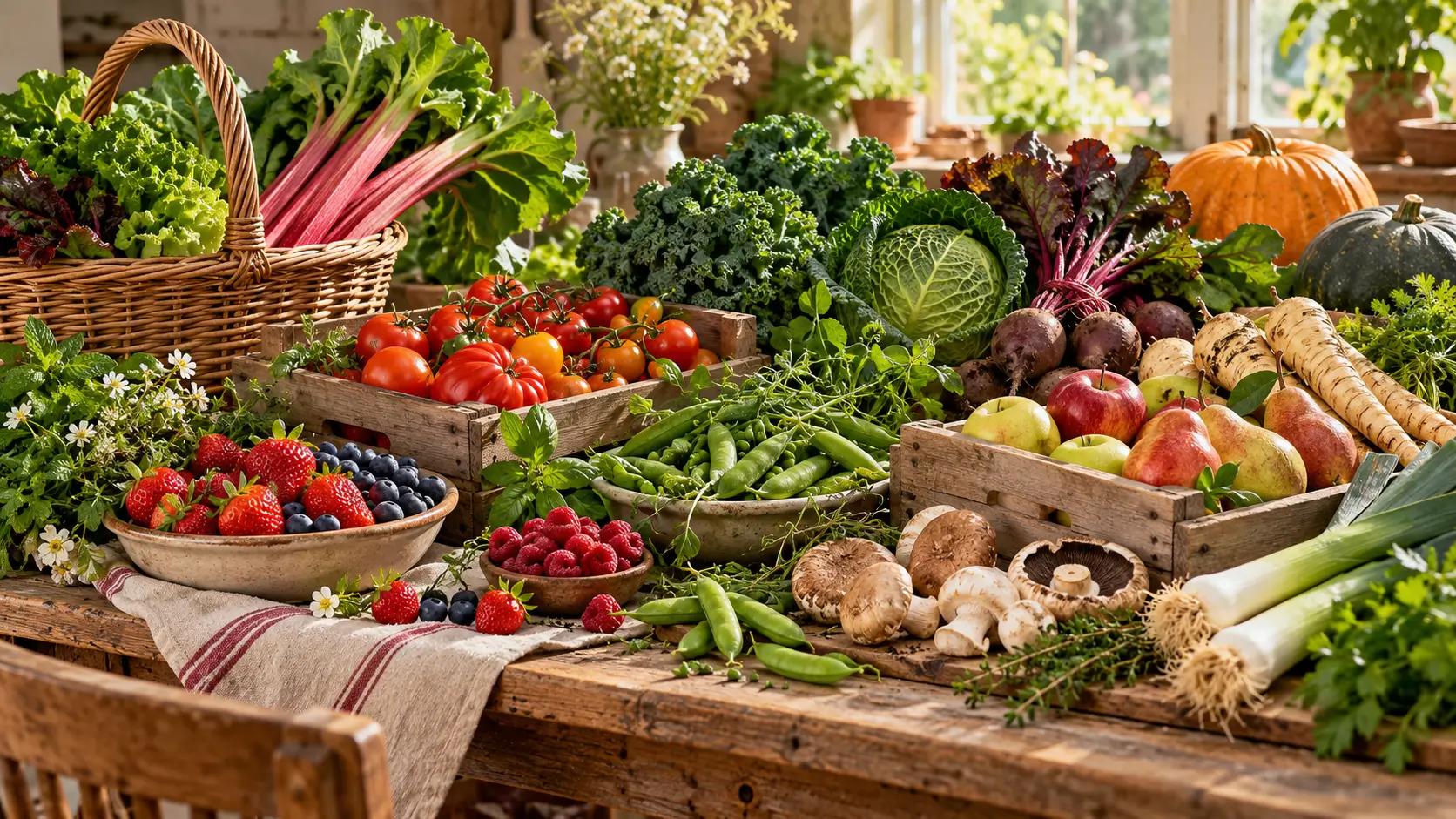
Walk into a supermarket and nearly everything is available all year round. Strawberries in January, asparagus in October, tomatoes in any month you like. That convenience is remarkable, but it comes with costs we rarely see: long transport chains, heated greenhouses and produce picked early so it survives the journey. Eating seasonally offers a gentler alternative, one that can improve flavour, reduce environmental impact and reconnect us with the rhythm of the year.
The idea is not to follow a strict set of rules or to give up foods you love. It is simply to build more of your meals around what is naturally growing at the time, and to make small shifts that add up. Here is a practical way to begin.
Learn What Grows When
Britain has a distinctive growing calendar. Spring brings rhubarb, spinach, spring onions and the first new potatoes. Summer is the season for berries, courgettes, salad leaves, peas and tomatoes. Autumn delivers apples, pears, squashes, beetroot and wild mushrooms, while winter relies on hardy crops such as leeks, kale, cabbage, parsnips and Brussels sprouts.
You do not need to memorise a chart. A simple seasonal food guide on the fridge, or a quick look at what the local market is selling, offers a reliable prompt. Over a year or two, the pattern becomes second nature. Seasonal produce tends to be cheaper when it is abundant, which makes this approach as kind to your wallet as it is to the planet.
Shop Closer to the Source
Buying from farmers’ markets, farm shops, box schemes and greengrocers shortens the distance between field and plate. Shorter supply chains usually mean fresher food, less packaging and a more direct benefit to the people growing it. Many areas now have community-supported agriculture schemes where you receive a regular box of whatever is in season.
If you rely mainly on supermarkets, you can still choose well. Check labels for the country of origin, favour British produce when it is in season and be wary of items flown in from far away. Frozen fruit and vegetables are also a sensible option, since they are typically frozen soon after harvest, retain their nutrients and reduce waste. Being thoughtful rather than perfect is the goal, and approaches like these fit neatly with the advice in living sustainably without the overwhelm: practical everyday choices.
Cook With the Seasons
Seasonal cooking is where the pleasure really lies. Summer invites simple salads, grilled vegetables and fruit eaten fresh. Autumn calls for roasts, soups and baking with apples and squash, while winter is made for slow-cooked stews and warming dishes built around root vegetables.
Let the ingredients lead. Rather than choosing a recipe and hunting for components, look at what is in season and plan around it. A handful of versatile techniques, such as roasting, blanching and making a good stock, will take you a long way. Preserving is another rewarding skill. Making jam, pickling or freezing a glut of summer produce stretches the season and reduces waste, and it fills the cupboard with flavours you can enjoy months later.
Think About Health and Honesty
Eating a varied range of fresh fruit and vegetables is widely recommended for good health, and seasonal eating encourages variety naturally, because the menu changes through the year. It is worth keeping claims in proportion, however. Seasonal food is not a miracle cure, and marketing language around “natural” or “superfood” products can be misleading. A balanced view is explored in natural health: separating genuine benefit from marketing hype, which is a useful reminder to look for evidence rather than slogans.
The strongest argument for seasonal eating is simpler: it tends to taste better. A tomato ripened in the sun has a depth of flavour that a winter one rarely matches. That enjoyment makes the habit easy to sustain.
If you have space, growing even a little of your own food adds another layer of connection. Herbs on a windowsill, salad leaves in a pot or a few tomato plants by a sunny wall require little effort and give you ingredients at their freshest. Children in particular enjoy watching food grow, and the experience tends to make everyone more curious about what is on their plate and where it came from.
Start small. Choose one or two seasonal ingredients each week, visit a local market once a month and try one new recipe built around what is currently growing. Over time, your shopping, cooking and eating begin to follow the calendar, and you may find yourself looking forward to each season’s arrivals the way people once did. It is a modest change with lasting benefits for your table, your community and the wider environment.